About
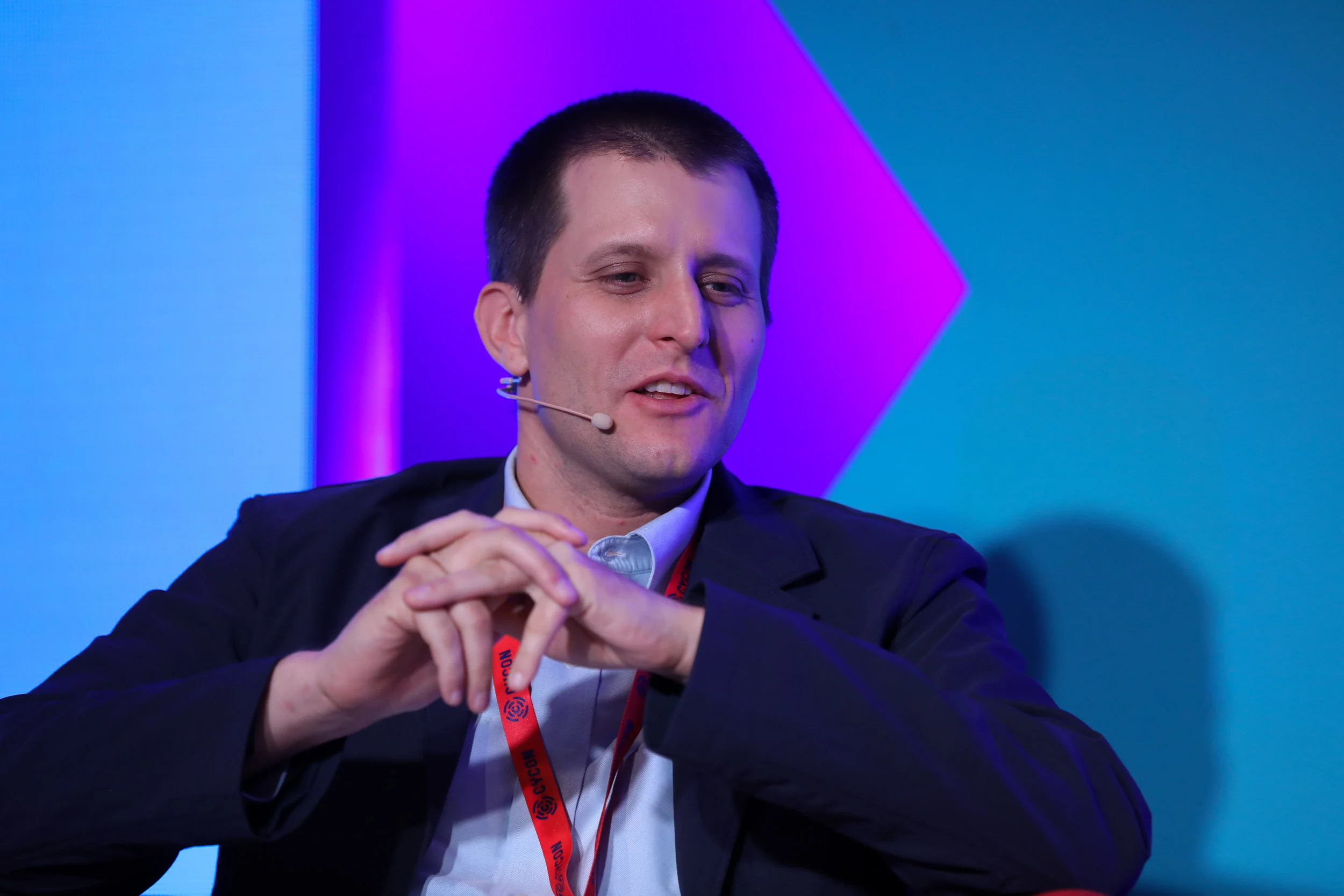
Presenting at NATO CCD COE CyCon X 2018
Current Position(s) and Professional Experience
Assistant Professor, Department of Political Science, Virginia Polytechnic and State University (2017-)
Assistant Professor Department of Social Sciences, United States Military Academy (2014 -2017)
Assistant Professor Department of Electrical Engineering and Computer Science,
United States Military Academy (2017)
Cyber Policy Fellow, Army Cyber Institute (2014-)
Cyber Fellow, Combating Terrorism Center (2014-)
Adjunct Professor, Defense Strategic Studies Program, National Security Studies Institute
University of Texas at El Paso (2013-)
Senior Program Officer, ICT Innovation, National Democratic Institute (2012-2014)
Research Associate, Center for the Study of Global Issues, University of Georgia (2010-2012)
Help Desk Technician and Web Designer, International Republican Institute (2007-2009)
Office Coordinator, Watson Mulhern LLC (2008-2009)
United States Peace Corps Volunteer, Ukraine (2005-2007)
Education:
2012 Ph.D. University of Georgia, Political Science
2008 MPP The American University, Public Policy
2004 B.A. Queens University of Charlotte, Major in English, Minor Business Admin
Books:
Peer Reviewed Journal Articles
Henry, S., Aaron F. Brantly. 2018. “Countering the Cyber Threat” The Cyber Defense Review (3)1: 47-55.
Brantly, Aaron. 2017. “Innovation and Adaptation for Jihadist Digital Security” Survival 59(1)
Brantly, Aaron. 2017. “The Violence of Hacking” The Cyber Defense Review 2(1)
Brantly, Aaron. 2014. “The Cyber Losers” Democracy and Security 10(2)
Major Reports
Book Chapters (reviewed) and Non-Peer Reviewed Journal Articles
Brantly, Aaron. “A Holistic Approach to the Encryption Debate” in Richard Harrison and Trey Herr. 2016. Cyber Insecurity: Navigating the Perils of the Next Information Age Rowman and Littlefield Press
Brantly, Aaron. “The Bear’s Matryoshka: Power, Democracy, Equality and Decline” In Hugh Leibert. 2016 Confronting Inequality: Wealth, Rights and Sloan Publishing
Brantly, Aaron. “After the Cyber Pearl Harbor: Vulnerability and Resiliency in a Networked World” in Hugh Leibert. 2016. What’s the Worst that Can Happen? The Politics and Policy of Crisis Sloan Publishing
Brantly, Aaron. “Defining the Role of Intelligence in Cyber: A Hybrid Push and Pull” in Mark Phythian. 2013. Understanding The Intelligence Cycle (Studies in Intelligence) Routled
ge Press.
Brantly, Aaron. 2015. “#Tech4Terror vs. #Tech4Good” The Fletcher Forum on World Affairs. http://www.fletcherforum.org/home/2016/8/1/tech4terror-vs-tech4good
Brantly, Aaron 2015. “Strategic Cyber Maneuver Warfare” Small Wars Journal. http://smallwarsjournal.com/jrnl/art/strategic-cyber-maneuver
Brantly, Aaron. 2015. “Extremist Forums Provide Digital Security Training” The Sentinel https://www.ctc.usma.edu/posts/extremist-forums-provide-digital-opsec-training
Brantly, Aaron. 2014. “Financing Terror Bit by Bit” The Sentinel https://www.ctc.usma.edu/posts/financing-terror-bit-by-bit
Professional Research Engagement and Opinion Articles
Brantly, Aaron. 2016. “The False Promise of Hacking Democracy” The Cyber Defense Review Blog http://www.cyberdefensereview.org/2016/11/04/the-false-promise-of-hacking-democracy/
Brantly, Aaron. 2016 “Enter the Policy and Legal Void” The Cyber Defense Review Blog http://www.cyberdefensereview.org/2016/08/21/enter-the-policy-and-legal-void/
Brantly, Aaron. 2016. The Decision to Attack the DNC and its Implications. UGA Press Blog https://ugapress.wordpress.com/2016/08/09/the-decision-to-attack-the-dnc-and-its-implications/
Brantly, Aaron and COL. Thomas Cook. 2016. “Sticks and Stones – Training for Tomorrow’s War Today” The Cyber Defense Review Blog http://www.cyberdefensereview.org/2016/03/01/sticks-and-stones/
Brantly, Aaron and SFC Jesse Frigo. 2015. “Big Data and Cybersecurity” The Cyber Defense Review Blog http://www.cyberdefensereview.org/2015/09/15/big-data-and-cybersecurity/
Brantly, Aaron. 2015. “Ambiguous Deterrence” The Cyber Defense Review Blog http://www.cyberdefensereview.org/2015/01/23/ambiguous-deterrence/
Invited Presentations and Guest Lectures
1. Brantly, Aaron. Commonwealth Cyber Fusion 2017. Virginia Military Institute. February 24, 2017. http://cyberfusion.virginia.gov/speakers
2. Brantly, Aaron. NYPD Cyber Conference 2017. February 1, 2017.
3. Brantly, Aaron. Government and Surveillance: Finding the Right Balance for Democracy. Conversations on Privacy at the University of Arizona. November 16, 2016.
http://sbsdowntown.arizona.edu/government-surveillance
4. Brantly, Aaron. Interdisciplinary Approaches to Cyber Security. University of Texas at El Paso. October 31, 2016. http://nafips.cs.utep.edu/programCyber.pdf
5. Brantly, Aaron. “The Jihadis’ Cyber Capacity and Aspiration” International Institute of Strategic Studies Bahrain 2016.
6. Brantly, Aaron. Poucher Lecture on Cybersecurity Policy Issues. University of Florida. November 9, 2015. https://www.law.ufl.edu/past-events/nov-9-2015-poucher-lecture-to-explore-cybersecurity-policy-issues-with-leading-experts
7. Brantly, Aaron. PEO C3T Cyber Warfare and Security: The Experts Forum. Washington, DC. November 20, 2015
8. Brantly, Aaron. Cyber Talks II. “The Decision to Attack: Military and Intelligence Cyber Decision-making. National Defense University. March 2015.
9. Brantly, Aaron. Cyber Terrorism Course for FDNY Officers. April 2015, 2016, and 2017.
Conference Papers
1. “Complex Deterrence: Moving from Atoms to Bits and Bytes” International Studies Association. Baltimore February 2017
2. “When Everything Becomes Intelligence: Machine Learning and the Connected World” International Studies Association February 2017.
3. “The Violence of Hacking: The Normative Environment of State Violence in Cyberspace” International Studies Association. Atlanta, G.A. March 2016
4. “Sensor vs Human Derived Big Data for Intelligence” International Studies Association. Atlanta, G.A. March 2016
5. “Digital OpSec for Foreign Fighters, Lone Wolves and Recruiters” ISSS-ISAC Joint Annual Conference. Springfield, M.A., October 2015
6. “Aseop’s Wolves: The Deceptive Appearance of Espionage and Attacks in Cyberspace“ International Studies Association. New Orleans, LA., February 2015
7. “Subverting reality: The role of propaganda in 21st century intelligence” International Studies Association. New Orleans, LA., February 2015
8. “Cyber Losers“ International Studies Association. Toronto, April 2014
9. “Governing Democratically in a Tech Empowered World” International Studies Association. Toronto, April 2014
10. “Democrats to Dictators: Halting Cyber Norm Internalization” ISSS-ISAC Joint Annual Conference. Washington, D.C., October 2013.
11. “Governing Democratically in a Tech Empowered World” International Studies Association South. Charlotte, October 2013.
12. “Cyber Losers” Connaught Summer Institute on Monitoring Internet Openness and Rights. Toronto, July 2013
13. “Spooks In The Machine: The Ethics and Legality of Training Intelligence Officers for Cyber Espionage” International Association For Intelligence Education. El Paso 2013.
14. “The President’s Elephant: Assassination, Torture and the Evolution of the Threat Spectrum” International Studies Association. San Francisco 2013.
15. “Covert Action and its Utility” International Studies Association – South. Atlanta 2012
16. “On the Utility of Covert Action” American Political Science Association New Orleans 2012.
17. “Information is Power: Cyber Espionage and Its Implications” British International Studies Association – International Studies Association Edinburgh 2012
18. “Defining the Role of Intelligence in Cyber” – Winner of Best Sectional Paper International Studies Association San Diego 2012.
19. “Resource Wars: A Modern Look at Systemic Causes of War Through Bio-Capacity Indicators” Georgia Political Science Association Savannah 2011.
20. “Cyber Warfare and the Probabilistic Allocation of Resources in Cyberspace” International Studies Association Montreal 2011.
21. “Cyber Warfare and the Probabilistic Allocation of Resources in Cyberspace” Georgia Political Science Association Savannah 2010.
22. “The Cyber Threshold: Understanding Cyber Security in the Context of Conventional Conflict” New Horizons in International Security University of Illinois at Urbana-Champaign 2010
Grants and Gift Funds
1. 2014 R-DEF Minerva Grant – $50,000 – The Cyber Side of Social and Political Movements
2. 2015 Bradley Foundation Gift – $275,000 – Support for international conference on cyber conflict.
3. Regional Youth Journalism Grants 1 & 2 – Kupyansk Region, Kharkiv Oblast, Ukraine, Small Project Assistance (Kivsharivka Youth and Community Activity Organization) Grant, Presidential Plan for Emergency AIDS Relief (PEPFAR) Grant 2005, Journalism, An Introduction to Practicum – Textbook (English, Ukrainian & Russian Translation)
Courses Taught
Virginia Tech Courses
PSCI 1024 Introduction to
Comparative Goverment and Politics [Fall 2017]
PSCI 3126 Intelligence and National Security [Spring 2018]
PSCI 29843 The Nature of Todays Security: Foundations of Complex Security Systems [Spring 2018/Fall2018]
United States Military Academy Courses
SS307 Introduction to International Relations [Fall 2017, Spring 2015]
SS377 Politics and Government of Europe [Fall 2017, Fall 2016]
IT305 Theory and Practice of Military Information Technology Systems [Spring 2017]
SS/IT460 Cyber Operations [Fall 2014]
SS202 Introduction to American Politics [Spring 2016]
Cadet Engagement
1. AIAD to Ukraine and the Baltics to Study Hybrid Warfare [Summer 2018]
2. AIAD to Republic of Georgia to Study Hybrid Warfare [Summer 2017]
3. AIAD to Mongolia to work on Human Rights [Summer 2015]
4. Cadet Faculty Advisor to 6 SOSH Majors
5. Project Theses Committee member 3 Cadets